Third Decade
1983–1992: Werder Bremen, Stuttgart '92 and reunification
President Willi O. Hoffmann puts a hefty dose of pathos into his voice when he addresses the crowd. The third decade of the Bundesliga brings drama, reunification and the rise of Werder Bremen as a genuine counter-power to Bayern Munich.
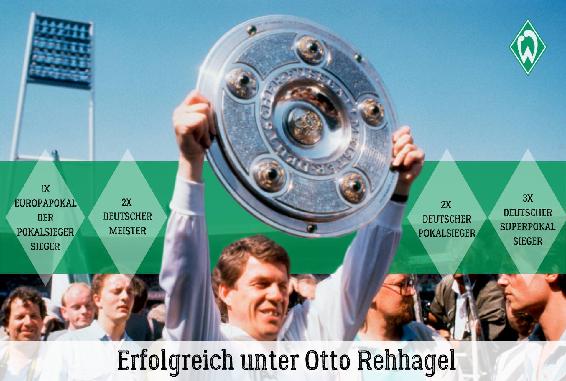
Under Otto Rehhagel, Werder Bremen becomes the most consistent challenger to Bayern's dominance. The "King Otto" era produces two championships (1988, 1993), a Cup Winners' Cup triumph, and some of the most memorable matches in Bundesliga history. Rudi Völler, Klaus Allofs and later Marco Bode become household names.
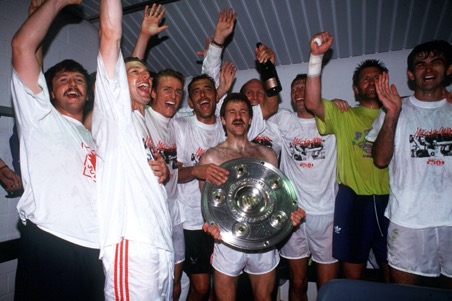
VfB Stuttgart wins the championship in 1984 and again in 1992 — the latter under Christoph Daum, in a dramatic final-day battle. Bayern Munich, despite the arrival of Jupp Heynckes as coach and stars like Lothar Matthäus and Karl-Heinz Rummenigge, cannot maintain their stranglehold.
Then comes 1989. The fall of the Berlin Wall changes everything — including football. East German clubs are integrated into the DFL system, and the Bundesliga expands temporarily. Players like Matthias Sammer (who moves from Dynamo Dresden to Stuttgart, then to Dortmund) symbolize the football reunification. 1. FC Kaiserslautern wins a sensational title in 1991 under the guidance of their fervent fans on the Betzenberg.
The decade ends with the first foreign coaches making their mark, with rising commercialization, and with the sense that German football is about to enter a completely new era. The Bosman ruling is just around the corner — and it will change everything.