Second Decade
1973–1982: Gladbach vs. Bayern, HSV dominance and European glory
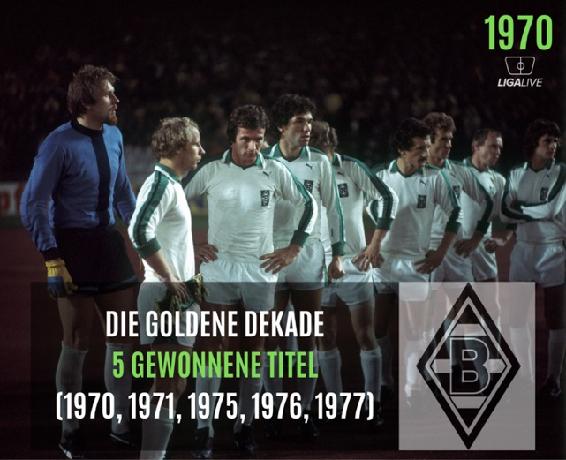
Before every home game of Werder Bremen, Rudi Assauer still walks past his locker in the Weserstadion one more time — even though his playing days are long behind him. The Bundesliga is growing up. The rivalry between Borussia Mönchengladbach and Bayern Munich defines the decade. Gladbach win four championships in five years (1975–1977), playing the most attacking football Germany has ever seen. Günter Netzer, the midfield maestro, becomes a cultural icon beyond football.
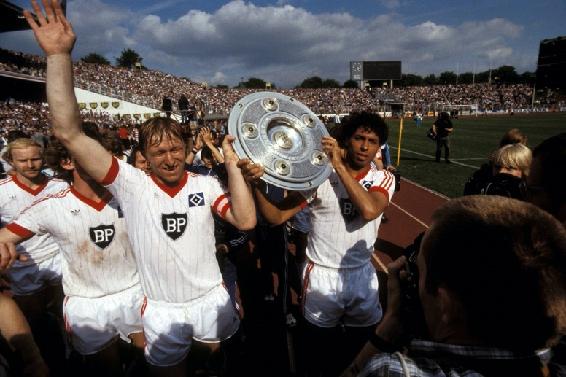
The Bosman ruling is still two decades away, but the Bundesliga is already internationalizing. Kevin Keegan arrives at Hamburger SV in 1977, the reigning European Footballer of the Year, and transforms the club from northern aristocrats into continental champions. The HSV wins the Bundesliga in 1979 and 1982, the European Cup in 1983.
Bayern Munich, meanwhile, completes a hat-trick of European Cups (1974–1976) with Franz Beckenbauer, Gerd Müller and Sepp Maier — a feat that cements their status as Germany's greatest club. But domestically, the decade belongs to Gladbach, Hamburg and the unforgettable duels between them.
1. FC Köln wins the double in 1978 — the first club to achieve this in the Bundesliga era. VfB Stuttgart, guided by the legendary Jürgen Sundermann, produces some of the most exciting football. And Fortuna Düsseldorf reaches the European Cup Winners' Cup final in 1979, losing narrowly to Barcelona.
The second decade also sees the first coaching legends emerge: Udo Lattek, who coaches both Bayern and Gladbach to titles; Hennes Weisweiler, the architect of the Foals; and Ernst Happel, the Austrian tactician who leads Hamburg to European glory.